Xander Braun · 27 September 2026
Mapping User Journey Patterns Through Content Clusters in Specialty Lumber Markets
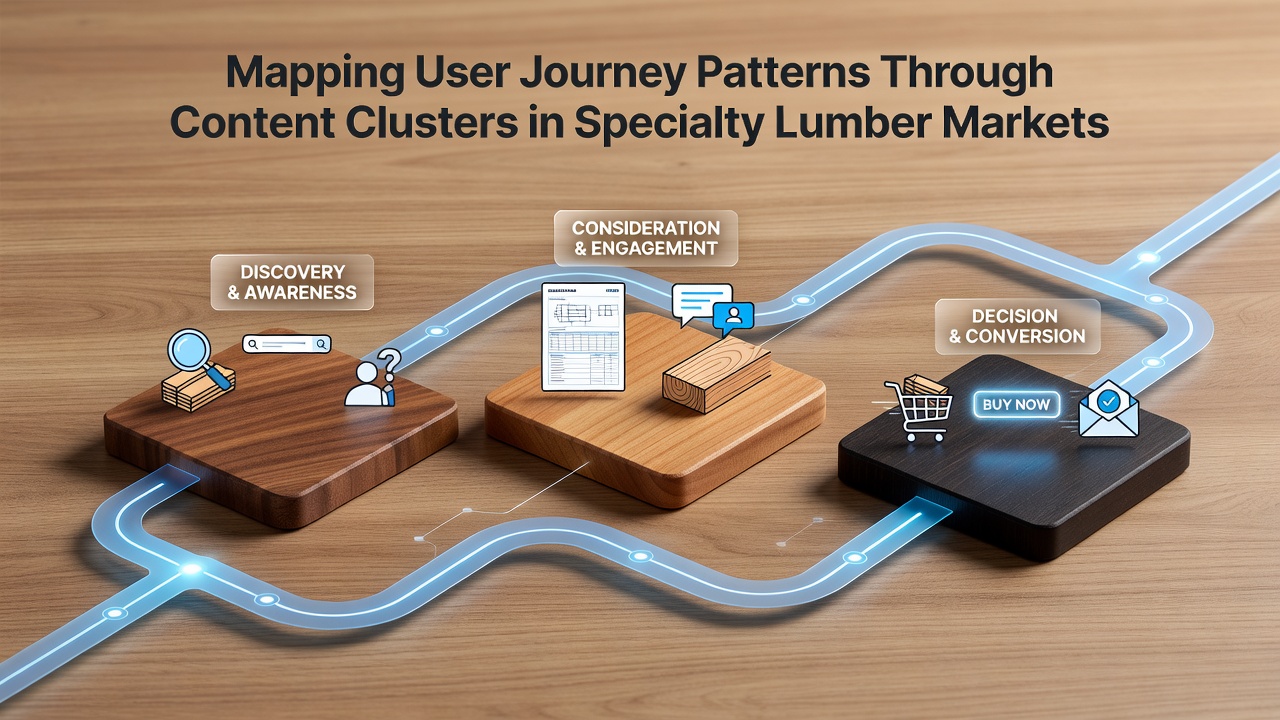
Specialty lumber markets operate through distinct buyer pathways that begin with species identification and extend through sourcing decisions, yet these routes rarely follow linear steps, and content clusters help organize the scattered information that buyers encounter along the way. Researchers have documented how clusters group related topics such as hardwood grading standards, regional milling capabilities, and certification requirements into thematic nodes that mirror actual search and decision sequences observed in the industry.
Buyers in this sector typically enter through broad queries about species performance or regulatory compliance, then move into narrower clusters that address custom dimensions, moisture content specifications, or chain-of-custody documentation. Data collected through September 2026 shows increased clustering around sustainable harvesting metrics, with traffic patterns indicating that users who land on certification pages frequently proceed to supplier comparison tools within the same session.
Defining Content Clusters for Lumber Audiences
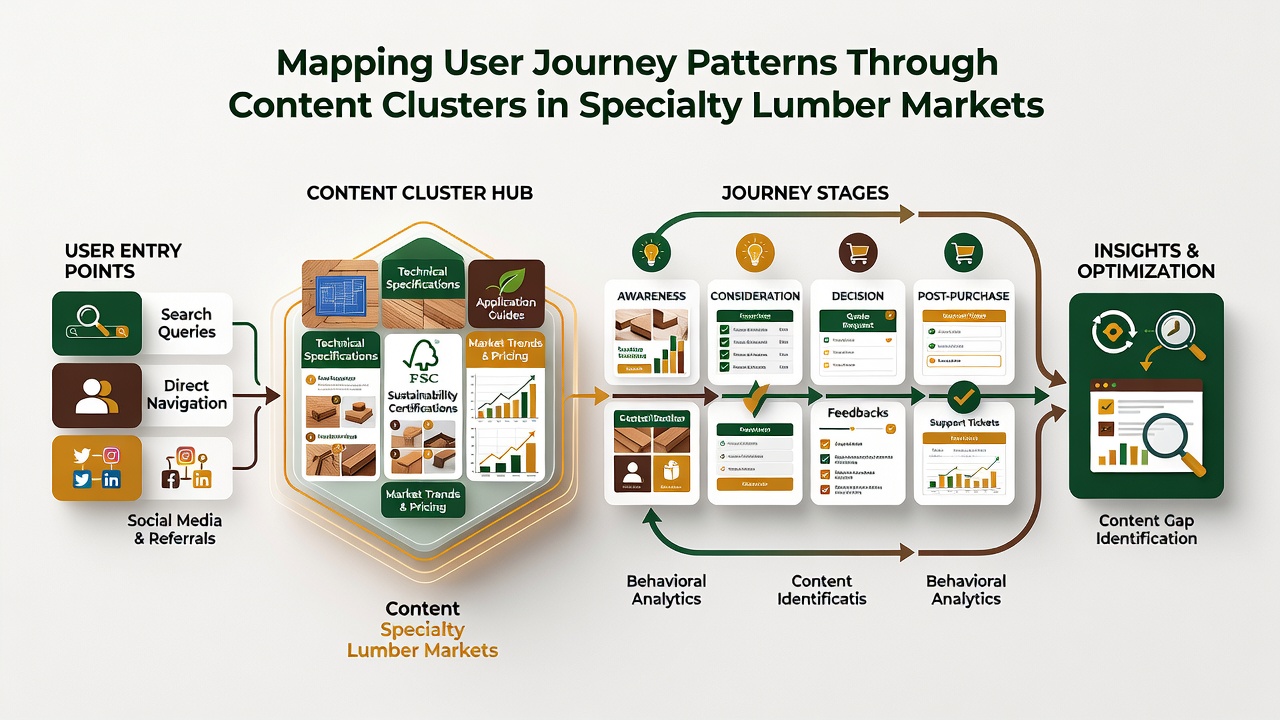
Content clusters function as interconnected page groups anchored by a central pillar that covers broad market themes while supporting articles drill into technical details. In specialty lumber contexts these pillars often center on species families such as white oak or black walnut, and the surrounding cluster pages explore kiln-drying schedules, veneer compatibility, or export restrictions. Observers note that this structure reduces bounce rates because visitors locate follow-up information without leaving the site architecture.
Industry reports indicate that clusters built around regulatory topics, including Lacey Act compliance and EU Timber Regulation updates, attract users who later navigate toward pricing models or inventory availability pages. The pattern repeats across regions where buyers seek both technical specifications and verified supplier networks in a single journey.
Tracing Typical Journey Sequences
Analysis of site navigation logs reveals several recurring sequences. One common path starts at a species overview, shifts to a sustainability certification cluster, then lands on custom milling case studies before reaching contact forms. Another route begins with regional availability maps and branches into grading rules followed by freight considerations. These sequences demonstrate that clusters aligned with buyer stages capture attention more effectively than isolated product pages.
September 2026 analytics from multiple specialty suppliers show that users who traverse at least three cluster nodes convert at higher rates than those who view single-topic content. The data further reveals that mobile sessions tend to favor shorter cluster hops focused on quick reference tables, whereas desktop sessions explore deeper technical comparisons.
Regional Variations in Cluster Navigation
North American buyers often prioritize clusters that address domestic grading rules and domestic shipping logistics, while European users show stronger movement toward clusters covering phytosanitary certificates and carbon footprint calculations. According to Natural Resources Canada forestry statistics, Canadian hardwood exporters recorded elevated engagement with bilingual cluster pages that link technical data sheets directly to export documentation requirements. Similar patterns appear in EU markets where buyers follow clusters that connect species selection with REACH chemical compliance information.
These regional differences underscore the need for clusters that accommodate varying regulatory entry points without forcing users through irrelevant sections. Suppliers who segment clusters by both species and geography report clearer visibility into which content nodes drive downstream actions such as quote requests.
Measurement Approaches and Observed Outcomes
Tracking cluster performance requires mapping internal link structures to actual session paths rather than relying solely on pageview counts. Heatmap studies combined with scroll-depth metrics reveal which supporting articles within a cluster retain attention longest. One documented case involved a cluster centered on reclaimed timber, where pages addressing structural testing protocols received the highest dwell times and subsequently funneled users toward project portfolio examples.
Additional findings from USDA Forest Service research summaries highlight how content that links species performance data with end-use applications produces extended journeys that cross multiple cluster boundaries. Suppliers using these measurements adjust internal linking to reinforce high-traffic sequences while pruning underperforming nodes.
Conclusion
Mapping user journeys through content clusters provides specialty lumber suppliers with a structured view of how buyers move from initial research to supplier engagement. The approach organizes technical and regulatory information into navigable pathways that match documented search behaviors across different regions and device types. Continued monitoring of navigation data supports ongoing refinement of cluster connections, ensuring that emerging topics such as updated traceability standards receive appropriate placement within existing structures.