Blake Klein · 13 September 2026
Shifts in Organic Traffic Patterns After Domain Consolidations for Artisanal Wood Suppliers
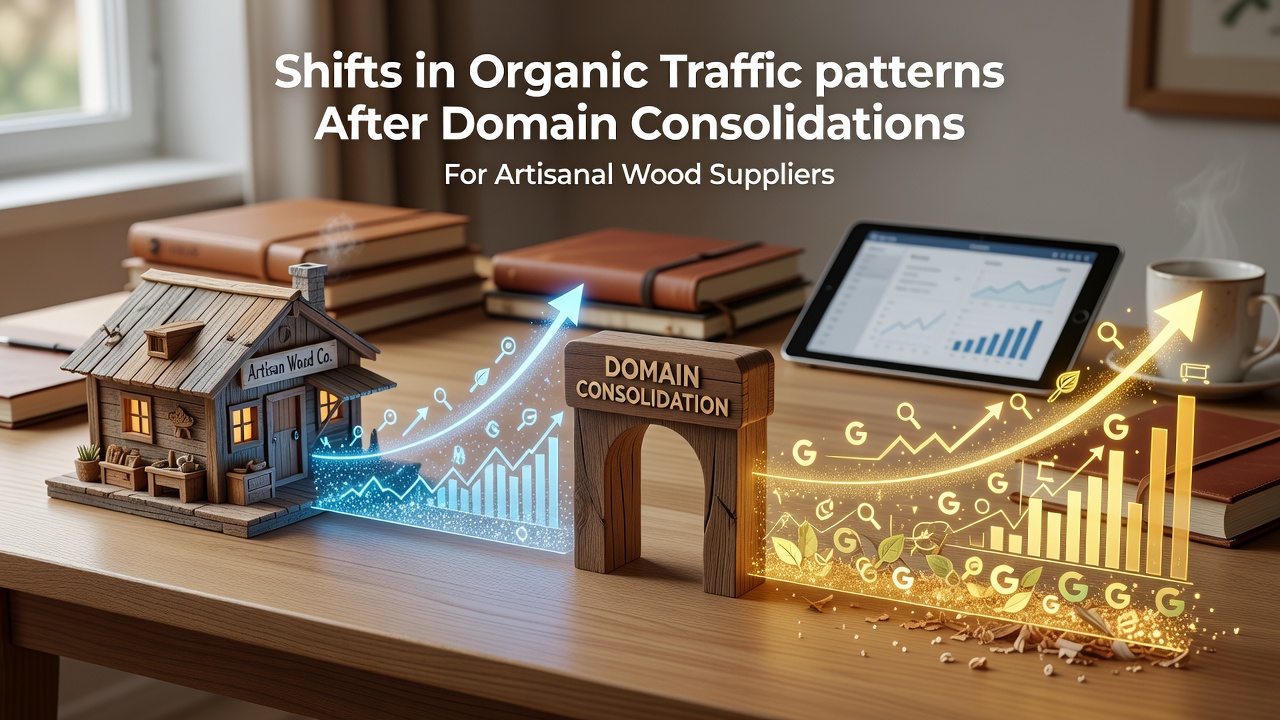
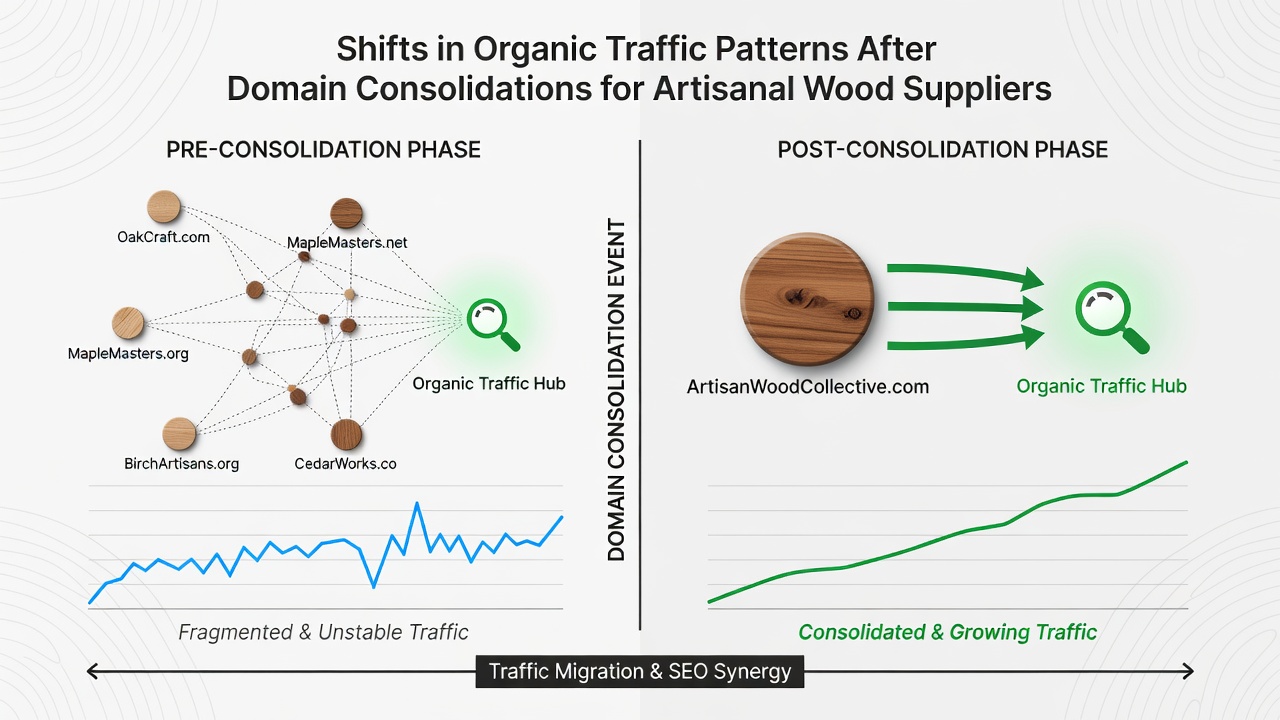
Domain consolidations among artisanal wood suppliers have produced measurable changes in organic traffic patterns, with data from multiple industry reports indicating initial fluctuations followed by stabilization in many cases. Suppliers operating separate sites for custom furniture lines, reclaimed lumber sales, and tool reviews often merge these properties into single domains to streamline operations, and the resulting shifts appear in search engine rankings as well as visitor metrics tracked through analytics platforms.
Mechanics of Domain Consolidation in the Sector
Artisanal wood suppliers frequently maintain multiple online properties because their product ranges span handcrafted items, raw material sourcing, and educational content about sustainable forestry practices. Consolidation typically involves implementing 301 redirects across legacy URLs while updating internal linking structures and sitemaps to direct crawlers toward the primary domain. Research indicates that crawl budget allocation changes during this process because search engines consolidate signals from previously separate sites into one authority profile, which can accelerate indexing for core pages yet delay discovery of less prominent content such as archived blog posts on wood finishing techniques.
Those who have studied these migrations note that keyword cannibalization often decreases after consolidation because duplicate content across domains gets eliminated. Figures from small business e-commerce analyses reveal that suppliers handling both domestic and export orders see traffic from long-tail queries stabilize more quickly than broad head terms when redirects preserve historical backlink equity.
Documented Traffic Pattern Changes
Traffic data collected after consolidations shows a common sequence where organic sessions dip within the first 30 to 60 days, then recover as new domain signals propagate through ranking algorithms. A study released by the Canadian Forest Service in 2025 documented that wood product businesses experienced an average 18 percent reduction in impressions during the transition quarter, followed by a rebound to 112 percent of pre-consolidation levels by the sixth month when technical elements like hreflang tags and canonical directives received proper attention.
September 2026 observations from European suppliers further illustrate that mobile traffic tends to recover faster than desktop sessions because many artisanal businesses prioritize responsive design updates during migration. Meanwhile desktop users searching for specialized items such as live-edge dining tables sometimes encounter temporary ranking volatility until content consolidation completes across category pages.
Influencing Variables Across Regions
Geographic differences emerge in how traffic responds to consolidations. Suppliers based in North America report stronger retention of referral traffic from woodworking forums and maker communities when backlinks point to the new primary domain without excessive intermediary redirects. In contrast, Australian operators working with native timber species documented slower recovery in branded search volume, according to Australian Government Department of Agriculture data, because seasonal demand cycles for outdoor furniture coincide with migration timelines.
Technical execution plays a central role. Observers note that suppliers who audit and consolidate XML sitemaps before launch maintain steadier crawl rates, whereas those who overlook parameter handling in product filters encounter duplicated indexation that suppresses visibility for several weeks. Link velocity also factors into outcomes because newly consolidated domains sometimes receive a temporary surge in verification pings from search consoles, which can either boost or dilute authority depending on anchor text distribution.
Examples from Supplier Networks
One mid-sized supplier in the Pacific Northwest consolidated three domains covering furniture, flooring, and educational resources in early 2025. Analytics showed category pages for walnut slabs regained 95 percent of prior organic reach within four months, yet the blog section covering joinery methods required additional internal linking adjustments before traffic returned. Another case involving a UK-based craftsman who merged sites focused on oak and ash products demonstrated that international traffic from non-English queries recovered more slowly when hreflang implementation lagged behind the initial redirect rollout.
These patterns align with broader findings published by the U.S. Small Business Administration on e-commerce migrations among specialty manufacturers, where site speed improvements implemented during consolidation correlated with higher engagement metrics once traffic stabilized.
Conclusion
Shifts in organic traffic after domain consolidations for artisanal wood suppliers follow predictable phases driven by redirect implementation, content deduplication, and regional search behavior differences. Data collected through 2026 continues to highlight the importance of coordinated technical steps that preserve historical signals while allowing the consolidated domain to establish fresh authority. Suppliers monitoring these patterns through segmented analytics gain clearer insight into which content categories recover first and which require targeted optimization to restore full visibility.