Blake Klein · 25 October 2026
The Influence of Kiln Drying Techniques on Dimensional Stability in Specialty Lumber for Architectural Projects
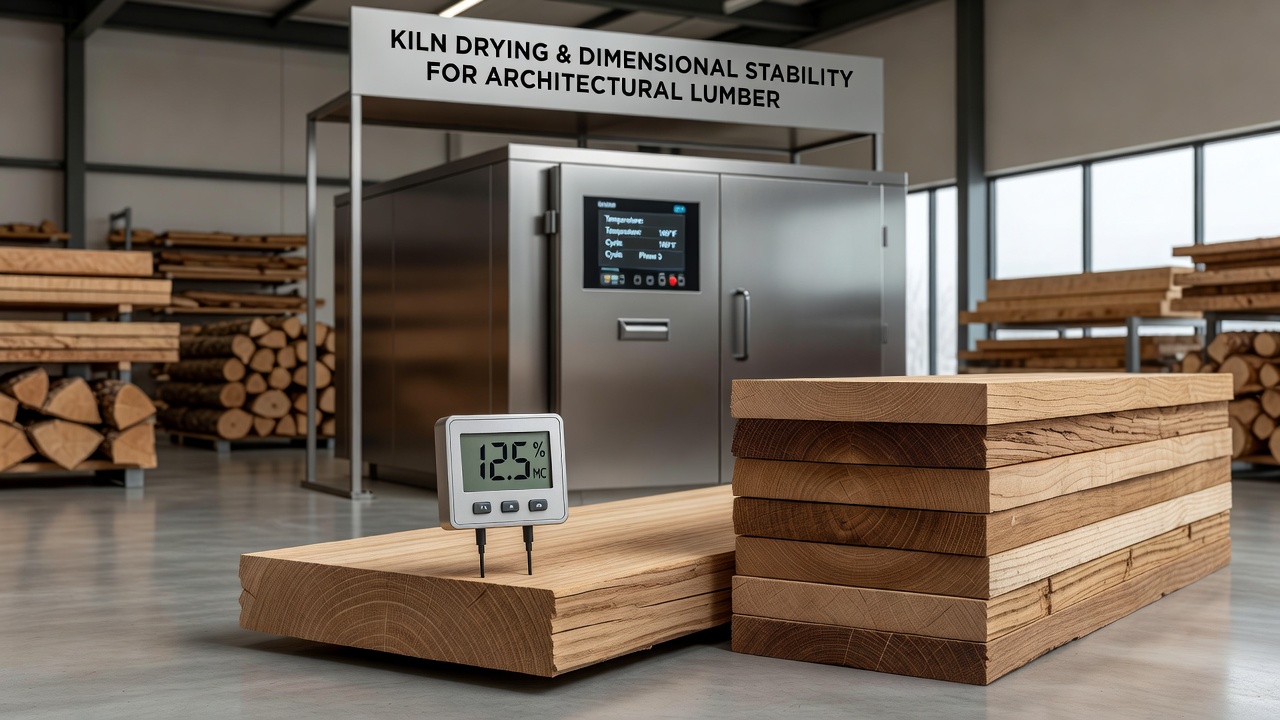
Specialty lumber destined for architectural projects demands tight control over moisture levels because even minor variations can lead to warping, checking, or cupping once the material reaches the job site, and kiln drying serves as the primary method that processors use to achieve the required equilibrium moisture content before fabrication begins.
Fundamentals of Kiln Drying Processes
Conventional steam kilns operate by circulating heated air through stacked lumber while operators monitor temperature and humidity schedules that progress through distinct phases, starting with an initial warm-up period that raises the wood temperature without excessive surface drying, followed by a drying phase where moisture gradients develop across the board thickness, and concluding with an equalization stage that evens out residual moisture throughout each piece.
Dehumidification kilns function differently because they rely on refrigeration coils to condense and remove water vapor from the chamber, which allows lower operating temperatures that reduce the risk of surface checks in dense hardwoods such as white oak or black walnut often selected for high-visibility architectural elements like paneling and millwork.
Advanced Techniques and Their Mechanisms
Vacuum kilns accelerate moisture removal by lowering the boiling point of water inside the wood cells, and this approach proves particularly useful for thick specialty timbers where conventional schedules would extend over weeks rather than days, yet the rapid pressure changes require careful calibration to avoid internal honeycombing that compromises structural integrity.
Radio-frequency drying applies electromagnetic energy directly to the lumber, generating heat uniformly throughout the cross-section instead of relying on surface-to-core heat transfer, and research from the USDA Forest Service shows this method maintains more consistent moisture profiles in species prone to collapse such as eucalyptus used in contemporary structural applications.
Effects on Dimensional Stability
Dimensional stability refers to the ability of lumber to retain its machined dimensions after installation, and kiln drying influences this property by reducing free and bound water to target levels typically between six and twelve percent for interior architectural use, thereby minimizing subsequent shrinkage or swelling when ambient humidity fluctuates seasonally.
Studies indicate that improper drying schedules create case-hardening, a condition where the outer shell dries faster than the core and locks in stresses that manifest as distortion during machining or after delivery, while optimized techniques that incorporate conditioning periods at the end of the cycle relieve these stresses and improve straightness retention in long-span beams and custom moldings.
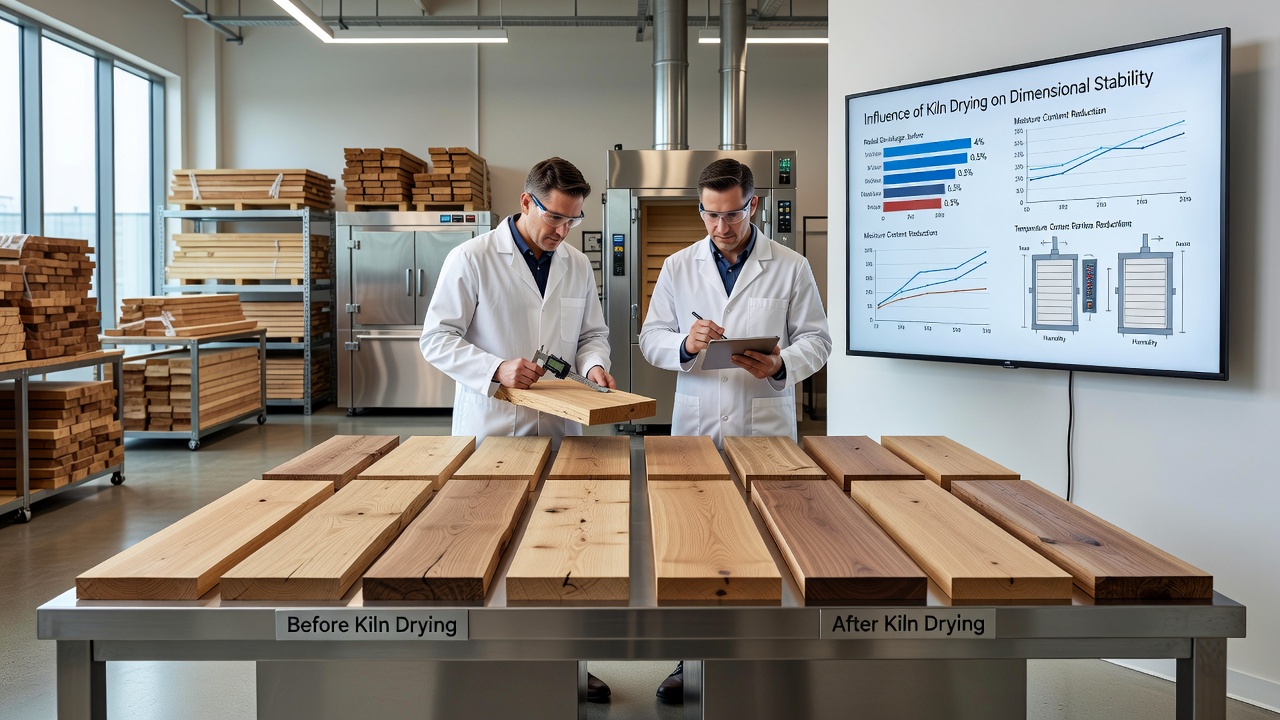
Observers note that vacuum and radio-frequency methods often produce lumber with lower residual stress gradients compared with traditional steam kilns, and this difference becomes measurable through prong tests where operators slice samples and observe how much the prongs separate or close after conditioning.
Application in Architectural Contexts
Architectural projects frequently specify exotic or reclaimed species that exhibit pronounced anisotropic shrinkage, meaning movement varies dramatically along different grain directions, and kiln operators adjust schedules accordingly to account for these characteristics so that finished components such as curved stair treads or large-scale cladding panels meet exacting tolerance requirements.
Data from industry reports reveal that lumber processed through controlled kiln cycles experiences up to seventy percent less movement in service compared with air-dried equivalents, which supports tighter joint tolerances in pre-fabricated assemblies shipped to urban construction sites where on-site acclimation time is limited.
Those who specify materials for public buildings and cultural institutions increasingly reference standards developed by organizations such as the USDA Forest Service Forest Products Laboratory to ensure that delivered stock maintains stability through multiple humidity cycles without requiring extensive field adjustments.
Industry Developments Through Late 2026
By October 2026, several North American and European mills had integrated sensor arrays that provide real-time moisture mapping inside operating kilns, allowing operators to modify schedules mid-cycle when readings deviate from predicted curves, and this capability reduces the incidence of over-dried or under-dried batches in high-value specialty runs.
Canadian research institutions have published comparative data on energy consumption across drying technologies, showing that hybrid systems combining dehumidification with targeted radio-frequency boosts achieve target moisture contents while lowering overall energy use per board foot in facilities handling mixed hardwood inventories.
Conclusion
Kiln drying techniques continue to shape the performance characteristics of specialty lumber by determining final moisture distribution and residual stress patterns that directly affect how the material behaves once installed in architectural assemblies, and ongoing refinements in process control support the precision demands of contemporary design and construction practices across multiple regions.